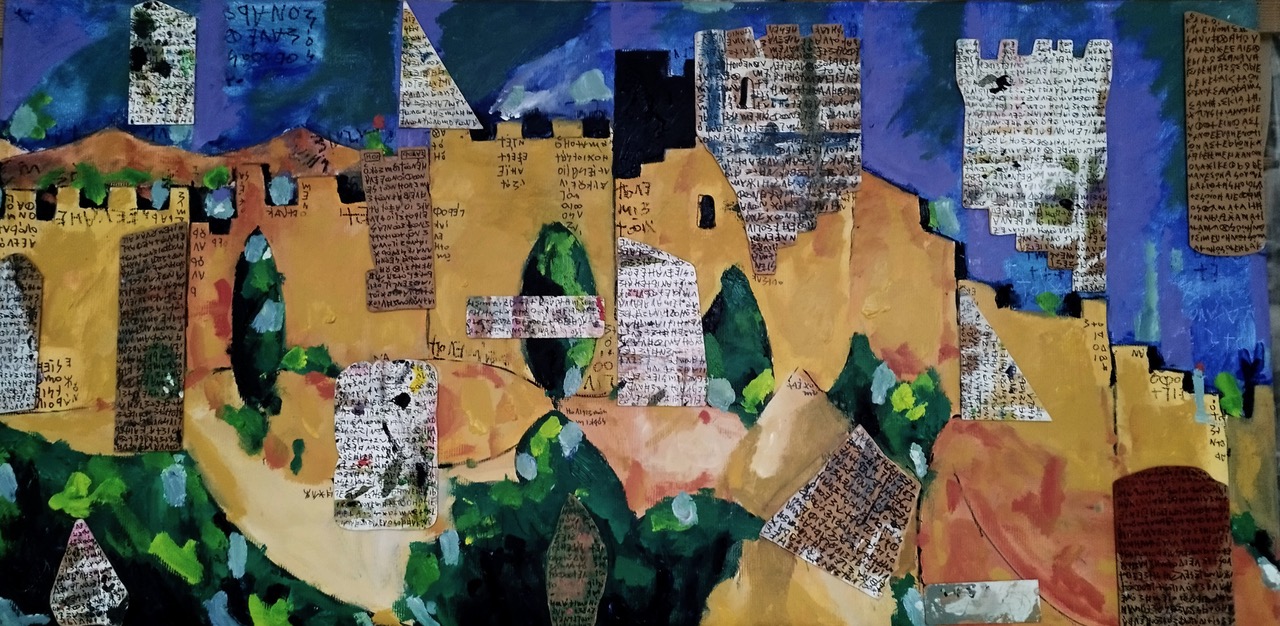


Stories of Myrina Castle
Sotos Zachariadis
Acrylics on OSB surface, 125 cm x 250 cm, 2025
Myrina Castle
The Castle of Myrina adorns the rocky and steep peninsula, which communicates with the mainland only from the east. The traces of the cyclopean walls testify to the existence of an ancient acropolis, dating back to the 13th century BC. The Pelasgians followed, in classical times the Athenian ‘colonists’, the Byzantines, the Venetians, the Gattilusi, the Ottomans. Centuries of history, disputes, and wars of strife commune over the successive fortifications of the castle. It is said that Catherine Gattilusio took her last breath here, as did the child she was carrying, offspring of the besieged Constantine Palaiologos XI. Byzantine emperors and Genoese rulers reconstructed and redesigned the impregnable fortress, the Orlov brothers besieged it. Hassan Gazi Pasha or Cezayirli restored the damage and equipped it with 150 cannons. Games of history and the turbulent political scene and the ordinary people in their given role: living, creating, sometimes retreating and sometimes lashing out, depending on the messages of the times. On the ramparts, there were archery slits, rifle-pits and “zematistres” (stone cavities filled with hot oil, melted lead or even boiling water to pour over the enemy from above), as well as levels for placing cannons. The highest defensive position was the citadel, which was protected by a separate enclosure. From 1479, when Myrina Castle came under Ottoman occupation, until the liberation of the island in 1912, buttresses were added to the main gate and cannon ports on the sea side. An Ottoman mosque, barracks, powder magazine, shelter and houses, as well as the documented presence of an Ottoman cemetery confirm the existence of a Muslim settlement within the walls.