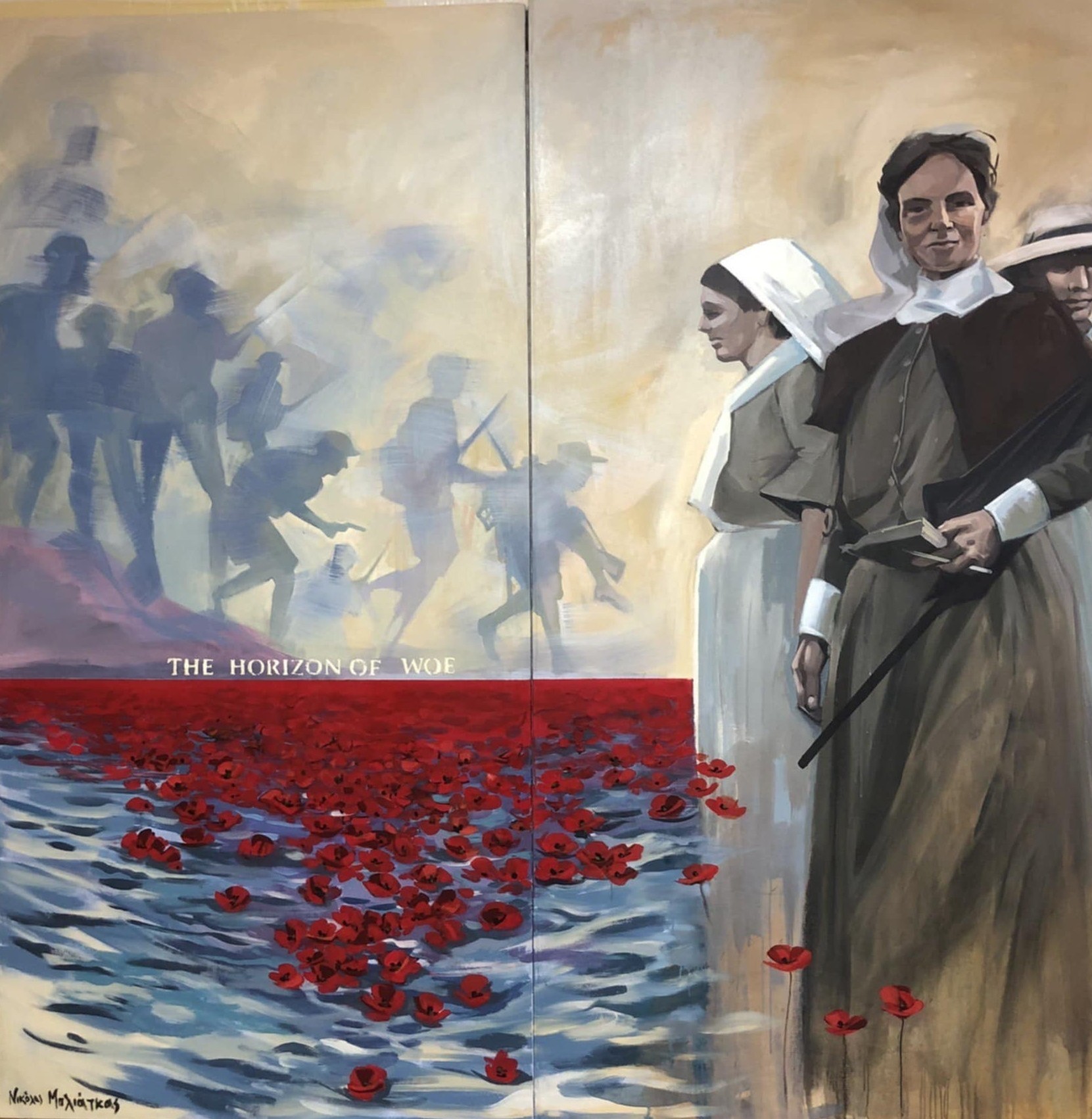


Nikolas Bliatkas
Acrylics on OSB surface, 250 cm x 250 cm, 2025
Listen to the artistt:The Australian Nurses of Limnos
The Red Cross Nurses
Out where the line of battle cleaves
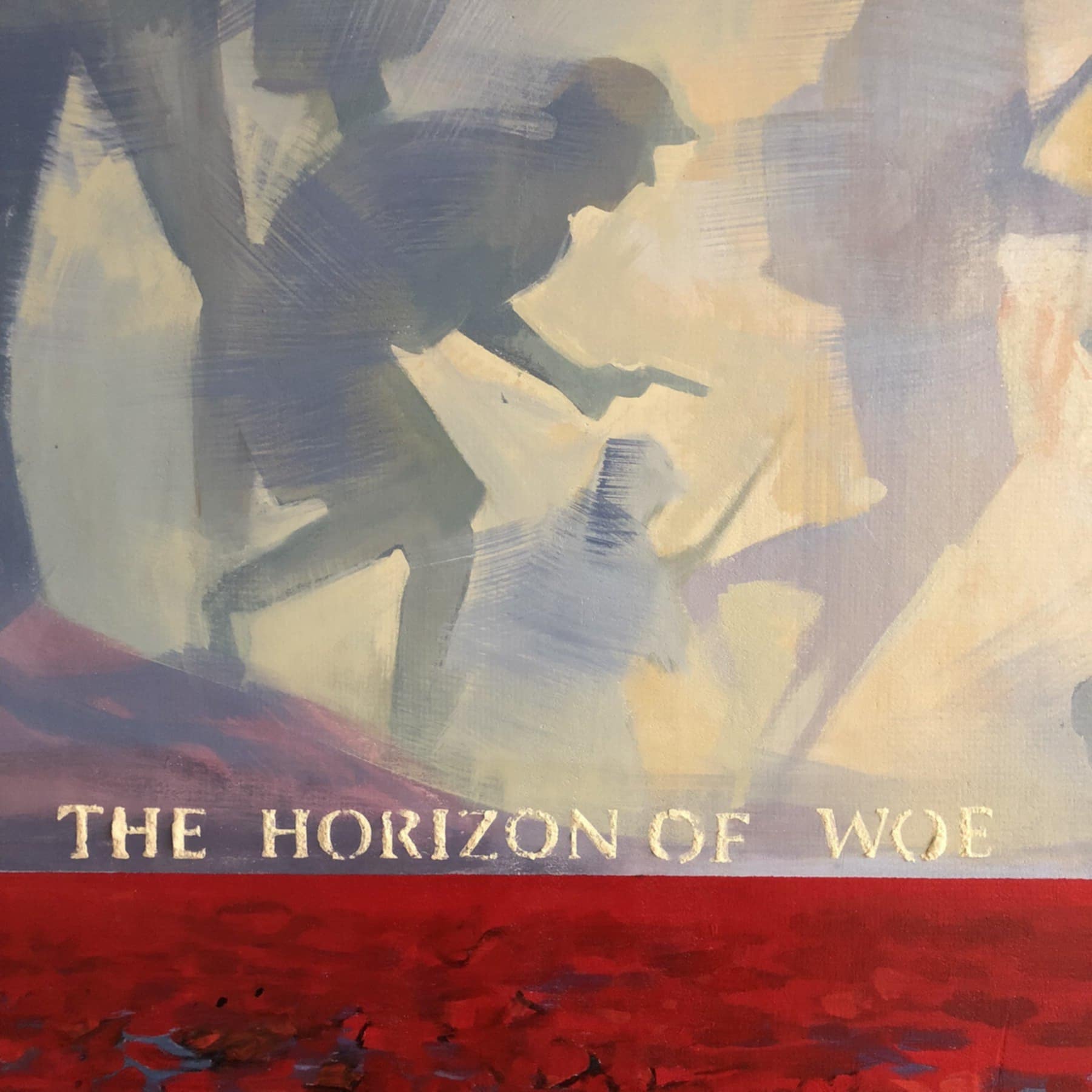
The horizon of woe
And sightless warriors clutch the leaves
The Red Cross nurses go.
In where the cots of agony
Mark death's unmeasured tide—
Bear up the battle's harvestry—
The Red Cross nurses glide.
Look! Where the hell of steel has torn
Its way through slumbering earth
The orphaned urchins kneel forlorn
And wonder at their birth.
Until, above them, calm and wise
With smile and guiding hand,
God looking through their gentle eyes,
The Red Cross nurses stand.
More than 100 years have passed since April 1915, when the Gulf of Mοudros was flooded with ships of the Allied fleet landing thousands of Australian and New Zealand soldiers, coming from the other side of the world to fight on the Gallipoli Peninsula against the Ottomans, who had joined the Central Powers in the context of the First World War.
Despite the objections of King Constantine, who called for strict neutrality, Prime Minister Eleftherios Venizelos, a supporter of the Entente, gave the Allies informal permission to make the Gulf of Moudros a base for the Allied fleet. The battles that followed were fierce and the fight was uneven for the untrained and inexperienced Australians and New Zealanders. Vast numbers were killed on the opposing side and large numbers of the wounded received the care of British nurses in the makeshift military hospitals set up on the island. With extraordinary care, the head of the Australian Nursing Corps, Grace Margaret Wilson, managed to organize the chaotic situation. When she arrived on the island of Limnos, she boosted the nurses’ morale, dealt vigorously with the shortages, and reduced the mortality rate of the wounded to a minimum despite the almost non-existent equipment. Unfortunately, many did not make it. They were forever covered by the Lemnian earth. In the Allied Cemetery at Moudros rest 148 Australians and 76 New Zealanders, as well as British, French and Indian soldiers. The poppy, a symbol of the First World War, blooms every April in the fields of Limnos as a symbol of life and remembrance of the Anzacs who took their last breath in this land.